
How an accidental interview with the UK’s new Prime Minister propelled my career – and his?
Fourteen years ago, a ritual cup of tea with my grandma set the course for my career.
I’d always been incredibly curious and, if I’m being completely honest, a bit nosey. As my grandma put it, in much kinder terms: “You’d make a fantastic journalist.”
After leaving college, declining three university offers I simply couldn’t bring myself to feel excited about, I’d secured an apprenticeship in artist and event management. It wasn’t long before I realised it wasn’t for me – yet stubbornly, I was determined to see it through to prove to my mum, who was convinced I’d made a mistake by opting out of uni, that success didn’t need to take a traditional route.
Call it fate, luck or a complete coincidence, but one day as I boarded the train to work, an advert for the News Associates School of Journalism popped up on my phone screen. My grandma’s words echoed in my mind...could I be a journalist? Was it a sign?
I applied and, a few weeks later, sat the exams to earn myself a place on the highly coveted course, taught by journalists and other industry experts. Fortunately, I passed, quit the job that was making me miserable, and loved every minute of my journey to become a journalist.
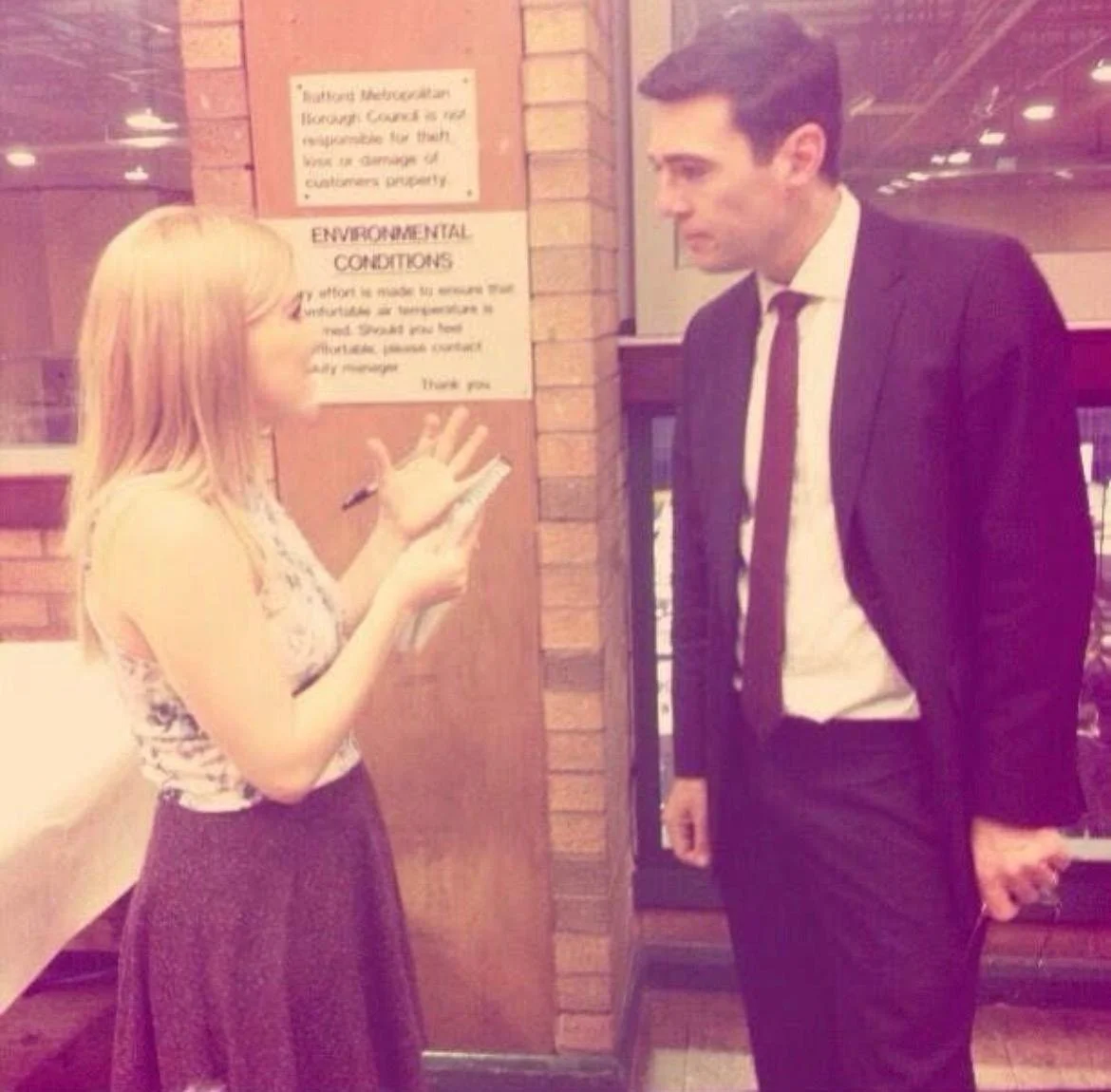
During the course, I was sent to cover the election count in Trafford. Little did I know that, in doing so, I’d set myself up for an interview with the future Mayor of Greater Manchester and, more significantly, the future UK Prime Minister.
A defining moment in my career
I spent the day interviewing local councillors, asking about their hopes and fears in a bid to generate headlines for our in-house digital newspaper, Mancunian Matters.
When then-Shadow Secretary of State for Health, Andy Burnham walked in, I was keen to find out what a Labour government would mean to him, both professionally and on a personal level. I’m almost ashamed to admit that he was the only person I’d immediately recognised during the day, which meant the stakes for his interview seemed somewhat higher. Excitement quickly gave way to nerves; this was my first big opportunity to put everything I’d learned, from interviewing techniques to shorthand, into practice.
But I needn’t have worried, because our new Prime Minister was incredibly sweet and patient, listening to my questions with intrigue and responding thoughtfully, sharing his belief that the NHS ‘depended on a Labour government’. Perfect, the headline I'd hoped for!
But he unintentionally gave me far more than heartfelt quotes to shape a news story.
Without me realising it at the time, my interview with Burnham would become a defining moment in my career. It was the moment in which I developed my own unique style of interviewing, honed my ability to pivot mid-interview to extract the strongest story, and gave me the confidence to embrace interview opportunities with both hands – no matter who I’m standing in front of, or how nervous I may be.
While I didn’t follow the traditional route into journalism, I proved to my mum that success doesn’t always follow the path we expect it to. Despite turning down the university offers I'd once worked so hard to secure, I made her proud regardless. Although she’s no longer here to see it, I’d like to think my grandma would be proud too – after all, she spotted the journalist in me long before I did.
Every interview leaves its mark – media training matters
Looking back, I often wonder whether that interview became a turning point for Burnham, too. Not because it was a particularly spectacular event for him, but because of everything that followed that moment.
Since then, he has become one of the most interviewed politicians in the country, navigating media scrutiny, live broadcasts and countless challenging conversations.
Every interview leaves its mark. It sharpens your messages, teaches you what resonates, exposes weaknesses in your narrative, and builds confidence in handling difficult or unexpected questions.
In many ways, the very lessons I was learning as a young, fresh-faced journalist were also lessons for the people sitting opposite me. This serves as a reminder that an interview is so much more than an exchange of questions and answers – it's a valuable opportunity to connect with your audience.
That’s why media training matters, something we’re proud to offer at Democracy. We recognise that the best spokespeople aren’t born with the knowledge and skills to tell their story under pressure; they’re meticulously coached to do it by experts.
Setting our clients up for success
At Democracy, we work with senior leaders, technical experts and brand representatives to help them communicate with clarity, confidence and authenticity when the spotlight turns to them.
Whether it’s a broadcast interview, a trade media Q&A or a high-stakes announcement in times of crisis, our role as industry experts is to ensure that when opportunity comes knocking, our clients are ready to make the most of it.