
AI search is spearheading cross-agency collaboration - and here’s why
Brand discoverability is being revolutionised by AI search and while different disciplines are competing to define their future, the reality is less about ownership and more about integration between them.
No single discipline or channel now has enough influence to consistently secure visibility in AI-generated results, which means the agencies that continue to operate in silos will find it harder to deliver impact for their clients compared to those willing to collaborate more closely.
The shifting landscape of AI search
AI search is growing quickly, but it is not replacing traditional search. At the end of 2025, SEO Works estimated that ChatGPT alone received more than 887M search-based prompts a day. Whilst this may seem substantial, the figure only accounts for around 6.5% of Google’s comparative figure, at around 14 billion searches daily, search-based prompts a day. Whilst this may seem substantial, the figure only accounts for around 6.5% of Google’s comparative figure, at around 14 billion searches daily.
The playing field is levelled out by Google’s AI Overviews, which are triggered in between 20-60% of all Google searches, depending on the industry and length of the query. Crucially, as indicated by SEMrush, Google AI overviews most frequently cite sources that appear on pages 2-3 onward in traditional search results, which challenges one of the core assumptions of SEO (Search Engine Optimisation), that ranking position directly equals visibility.
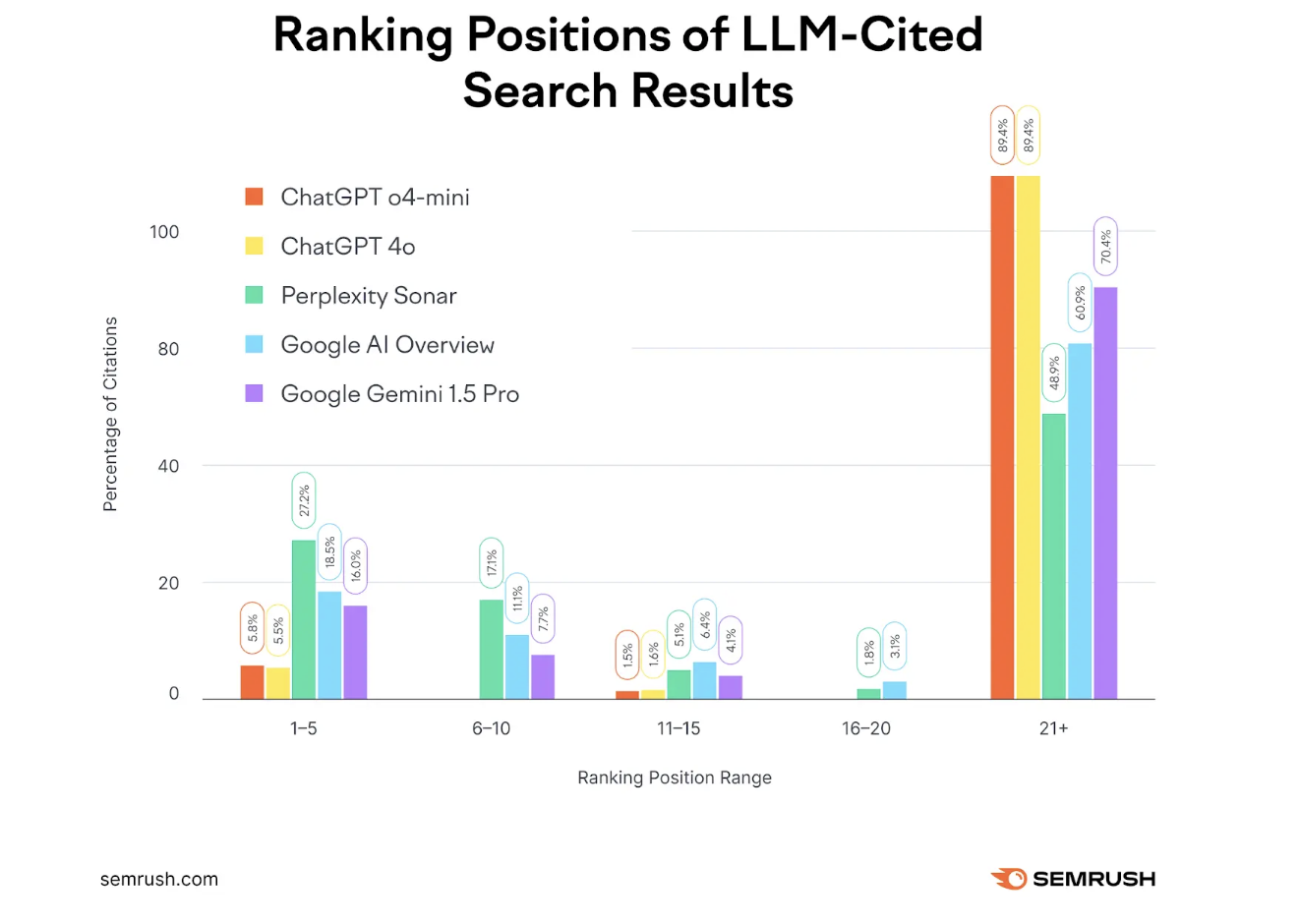
This has been a catalyst in the development of Generative Engine Optimisation (GEO), a process of maximising the likelihood that a brand or piece of content will show up in either LLM search or AI overviews.
Why traditional SEO alone is no longer enough
SEO still matters and is unlikely to ever be completely irrelevant in the future. Technical performance, crawlability and structured content all influence whether a brand can be discovered and understood.
However, GEO changes the end goal which is now being cited instead of just ranking highly and being indexed.
On-page optimisation is already shifting towards longer, more intent-driven queries, which better reflect how people use AI tools. Even so, strong content on its own has limits if it sits in isolation.
AI systems do not rely on a single source. They pull together information from multiple places. If a brand only exists on its own site, it is harder for that information to be trusted or surfaced and this is where SEO on its own starts to fall short.
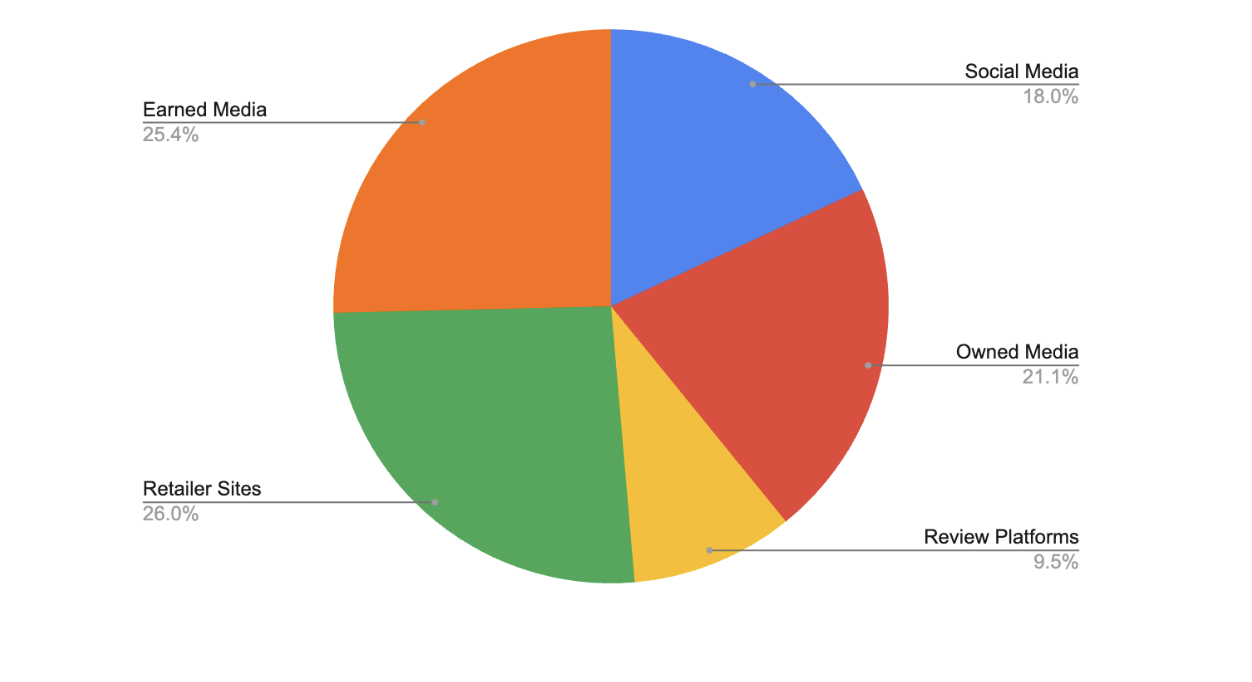
Analysis of 57k prompts across homes & gardens and food & drink - Feb 26
PR’s role in a citation-driven environment
If visibility is now driven by citations, PR becomes crucial. Earned media gives brands third-party validation, which supports the signals AI systems look for when deciding what to include.
This links closely to E-E-A-T (Experience, Expertise, Authoritativeness, and Trustworthiness), particularly the latter two elements. Traditional SEO placed a lot of weight on links, however in AI search, unlinked mentions and contextual references in credible sources can carry just as much value.
Analysis of more than 52,000 consumer prompts through SEMrush suggests earned media contributes to around a quarter of AI citations, and while this is not the whole picture, it is hard to ignore the impact of meaningful PR.
Why PR and SEO need to work together
AI visibility is ultimately shaped by a combination of technical foundations, on-site content and off-site signals, and while each of these contributes something individually, it is their alignment that determines whether a brand is actually cited.
AI systems build confidence by cross-referencing multiple sources, so a brand that appears consistently across its own site, in press coverage and across other platforms is far more likely to be included in an answer than one that only performs well in a single area.
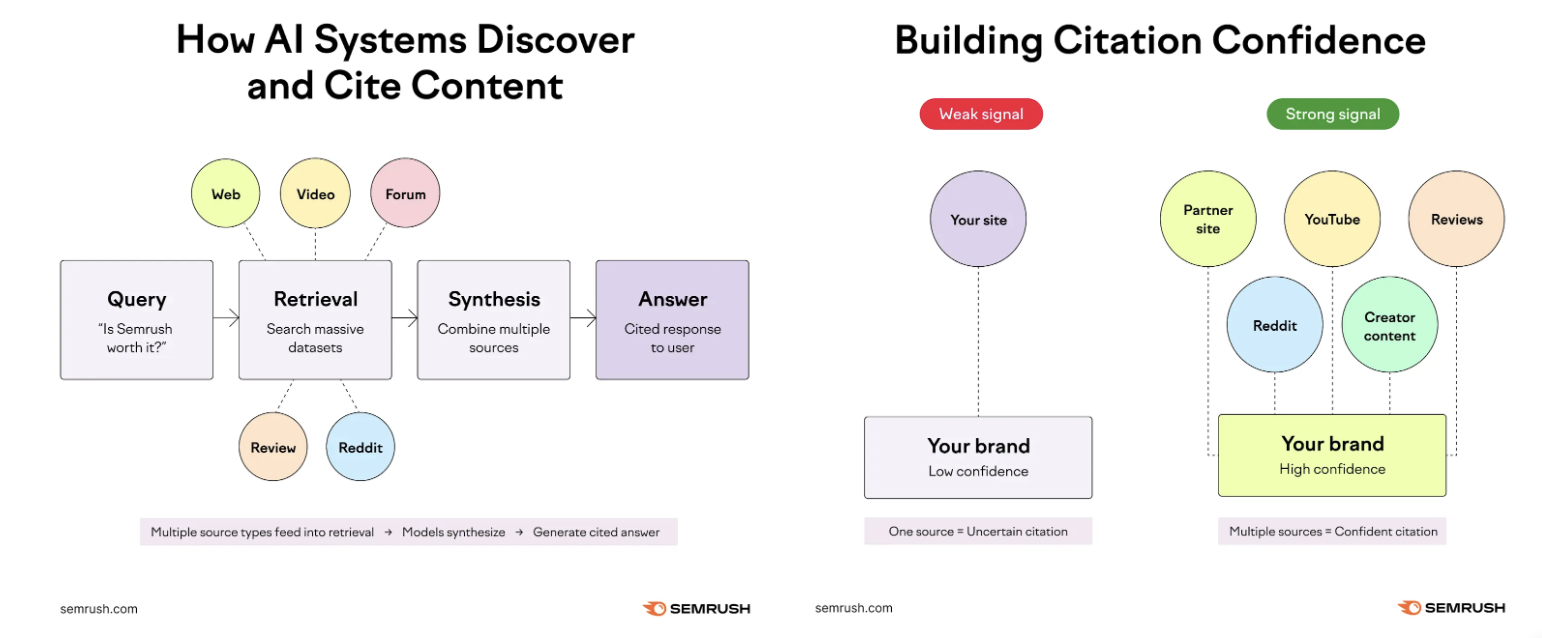
The risk comes when these elements are not aligned as PR and SEO teams work to different priorities and target different themes or operating on separate timelines can quickly create inconsistencies that weaken overall visibility.
Collaboration is essential because without it brands are increasingly unlikely to appear in AI search results.
What collaboration actually looks like
A strong approach starts with a shared understanding of how audiences are using AI search, what they are asking and where competitors are already being cited, as this provides a clear view of where opportunities and gaps exist.
At Democracy, we utilise SEMrush to understand where our clients are appearing in AI search, where their competitors are appearing and ultimately where those gaps sit. These insights then shape the strategy, allowing us to identify long-tail prompts that reflect real queries and use those to guide both press activity and on-site content, ensuring that PR outputs and SEO efforts are aligned around the same themes rather than working separately.
Once the on-page content is built and the off-page press release is ready to be pitched to media, the focus shifts back to the data to understand which sources shape the narrative in AI results. While broad coverage still plays a role, there is a clear difference in how frequently certain publications are cited, so placing greater emphasis on outlets that are both AI-friendly and consistently referenced increases the likelihood of being surfaced.
The final stage of the process is benchmarking and monitoring any shift in visibility over time, as AI search is not static and requires ongoing refinement. Using SEMrush, we track how often clients are being mentioned, where those mentions are coming from and how this compares to competitors, building a clearer view of share of voice within AI-generated responses.
How GEO is changing agency roles
GEO is beginning to blur the edges between disciplines, not by replacing them but by increasing the level of overlap between them. PR is no longer limited to traditional media coverage, as platforms like YouTube, Reddit and LinkedIn are increasingly part of the same visibility ecosystem due to how frequently they are referenced in AI-generated answers.
At the same time, SEO is moving further into content strategy and audience understanding, rather than being confined to technical delivery, which creates a more natural point of intersection between the two.
The takeaway
AI search does not reward isolated performance, but it rewards consistency across multiple signals, which means relying on a single discipline is unlikely to be enough. SEO alone risks producing well-structured content that lacks authority, while PR in isolation risks generating strong coverage that is not fully connected or discoverable.
The opportunity sits in bringing the two together, with a shared approach that aligns technical optimisation, content strategy and earned media to build a more complete and credible presence.
Agencies must move from channel ownership towards shared outcomes and brands should work with partners who can align their efforts rather than operate in parallel, because in AI search, visibility is no longer won in one place.
If you are starting to think about how your brand shows up in AI search or want a clearer view of where you stand against competitors, the Democracy team can help map out and build a strategy that connects PR and SEO. Get in touch at hello@democracypr.com or call 0161 8815941.
