
How early movers on AI search are thriving as traditional search dies
Google this week confirmed what had been building for two years – that the search results page, as we've known it, has gone.
From next week, Google will generate direct answers while YouTube will respond to questions by drawing on its entire video library and AI agents surface brand recommendations passively in the background.
The brands that appear in those answers are the ones AI has enough credible evidence to cite, while everyone else is invisible regardless of where they rank.
For most of the industry, this landed as a wake-up call. However, for the brands we've been working with at Democracy, it was exactly what we'd been preparing for.
Three years in the making
I joined Democracy in September 2022, alongside starting my Digital Marketing Degree Apprenticeship at Manchester Metropolitan University, where the scale of what was coming started to become clear.
David Edmundson-Bird, MMU's AI lead, was a strong influence in my passion to explore the industry. He has one of the sharpest views on how AI is reshaping brand discovery and having him as a lecturer pushed me to think seriously about the future.
Outside of the course, I stayed close to the sources tracking this in real time, utilising TechCrunch and Search Engine Land for the hard news and Phil Birchenall and Ethan Mollick on LinkedIn for the thinking behind it.
Working with the team at Democracy, we launched our AI visibility proposition at the end of last year, combining PR and GEO into a single offering and became one of the first PR agencies to do so. This has put us in an incredibly strong position with the recently announced changes to the future of search.
Why PR owns this space
AI draws on trusted editorial domains when it constructs answers, with news titles and credible third-party coverage among the most cited sources across ChatGPT, Gemini, Perplexity and Google AI Mode.
SEO agencies will try to move into this space but earning coverage in the publications AI actually cites requires journalist relationships, editorial understanding and the ability to place the right story in the right outlet at the right time, none of which you can replicate from a keyword list.
Recent research confirms that schema markup produces no meaningful improvement in AI citations, either, and visible, credible, well-placed editorial coverage in outlets AI already trusts, which is what good PR has always delivered.
What early movers have seen
Our clients who moved early have seen their brand mentions in AI responses more than double since the end of 2025 and are seizing share of voice from competitors.
Some focused on earned media by building consistent coverage in the outlets AI trusts most, while others took on YouTube AI optimisation projects, restructuring video content around the specific questions their audiences ask and are already seeing those videos surface in AI prompt responses.
According to Search Engine Land, 90% of brands currently have zero mentions in AI search results, and most are unaware. When they find out, the brands already established in that space will be difficult to displace.
Why the window is closing
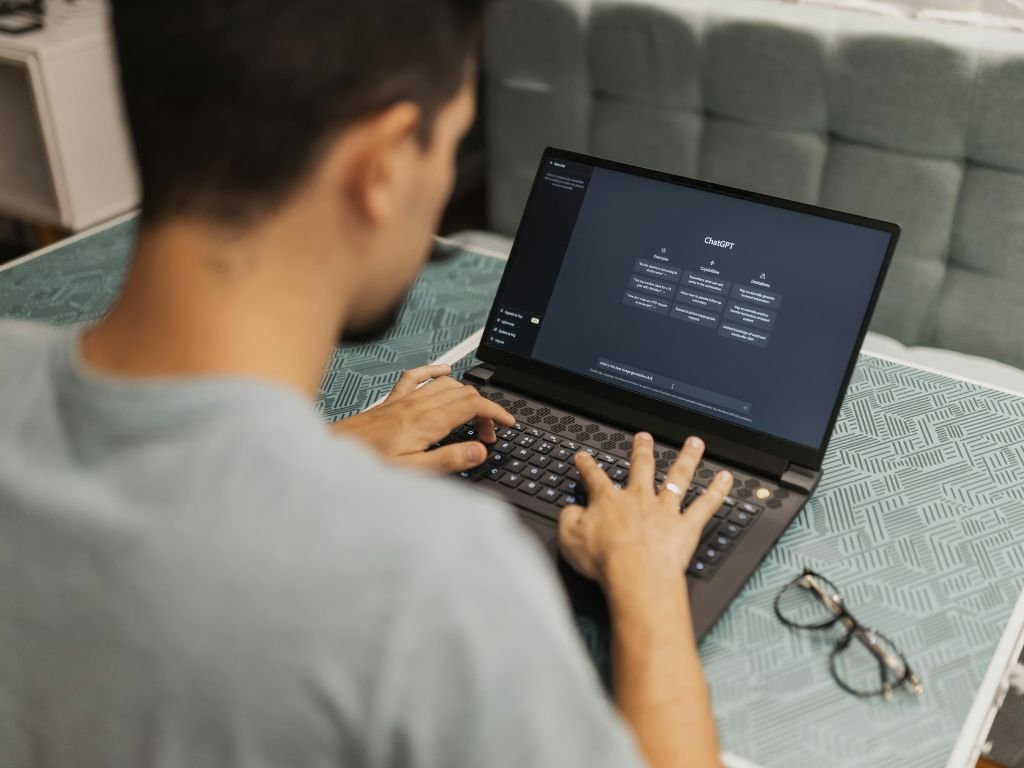
The brands that started adapting early are ahead and pulling further away. First-mover advantage is key and the brands already cited by AI will continue to build momentum.
If GEO has never crossed your mind, now is the time to make the move. Whilst the changing landscape brings various issues, it also brings lots of opportunities for challenger brands to become a real force in the field.
If you want to understand where your brand stands with AI visibility and how we could supercharge your search, get in touch with the team at Democracy using the contact button below.
