
Why branded merchandise is having its main stage moment and how brands can steal the spotlight
There was a time when branded merch meant maybe a tote bag with a logo. Functional? Sure. Memorable? Not at all.
Fast forward to 2026, and it’s having its full main stage moment.
Branded merch is no longer just nice to have, it’s cultural currency. It’s why consumers and creators queue for limited merch out of FOMO, post to show they are part of the moment, and actively engage with brands.
Nowhere is this shift more prominent than at Coachella. Or, as the internet dubbed it this year, thanks to Justin Bieber’s long-awaited comeback, “Bieberchella”.
Branded merch wasn’t always a core focus and often sat lower on the priority list for marketing budgets; now, it plays a central role in shaping content moments to driving engagement.
The rise of ‘main character’ merch
Coachella 2026 really got us talking. Not because of the festival outfits (although, yes), but because of how brands aligned with the Coachella craze.
This isn’t just about good-looking hoodies and well-timed drops. It’s a fundamental shift in how brands are thinking about merchandise - moving from passive branding to active participation in cultural moments.
The best brands aren’t asking “what can we give away?” or “where are we going to get the most footfall?” anymore, they’re asking:
Is our community going to be there?
Is our community expecting us to be there? (Don’t be afraid to step outside your lane. Unexpected moments can work too!)
What would they expect to see from us in this space?
How can we show up authentically and connect with them?
The brands that keep getting it right
The key to getting it right? A proven formula, executed with authenticity, that consistently drives conversation.
At Coachella 2026, the brands that stood out didn’t just show up, they belonged.
Poppi’s desert villa built for the feed
Poppi, a trending drinks company, showed how brands become the moment rather than competing for attention with their desert villa.
It wasn’t just a place for influencers to stay, it was a fully built content ecosystem designed for constant shareability and content moments.
Every corner was intentional. Bold, recognisable colour palettes, playful props and branded details that made every photo or video instantly identifiable as Poppi. From lilos and cup holders to pyjamas, door signs and even claw machines, everything was intentional and a content opportunity.
Crucially, wherever influencers turned, there was a ready-made moment to capture, making content creation feel natural, not forced for their audiences.
Rhode solving the real problem
Rhode, Hailey Bieber's beauty brand, understood the assignment at “Bieberchella”.
The launch of their new Rhode Peptide Lip Treatment in Caramelized Banana, created in collaboration with CEOs husband Justin Bieber, was activated at Coachella through merch designed to be integrated within the day-to-day, not just a one-off occasion or stored in bags.
Rhode understood their audience and delivered something they knew would resonate with their consumers by addressing festival frustrations like lip products disappearing in bags and wearing off when you take a sip of a drink.
In collaboration with 818 Tequila, Rhode designed a dual-purpose holder, keeping both your Rhode lip treatment and your drink within arm’s reach, with the drink flavour matched to the lip balm for consumers to have a seamless, sensory experience.
Rhode’s viral lip cases from 2024, designed for mirror selfies, still dominate feeds today showing that when branded merch is done right, it has real staying power.
Finally, beauty products moved out of the bag and into the spotlight.
Why does it keep working?
The role of branded merch has fundamentally changed.
It’s no longer about visibility, it’s about participation.
The most effective brands understand that merch isn’t a giveaway; it’s a way into the moment. It’s how you embed your brand into what people are already doing, wearing, and sharing.
The brands getting it right are those that tap into real cultural moments, solve genuine consumer needs, and make their products visually irresistible designing them not just to be used, but to be shared.
Because when merch is created with the moment in mind, it doesn’t feel like marketing, it feels like it belongs and people want to be seen with it.
Democracy turn festival chaos into cultural currency
At Democracy, we’re no strangers to this.
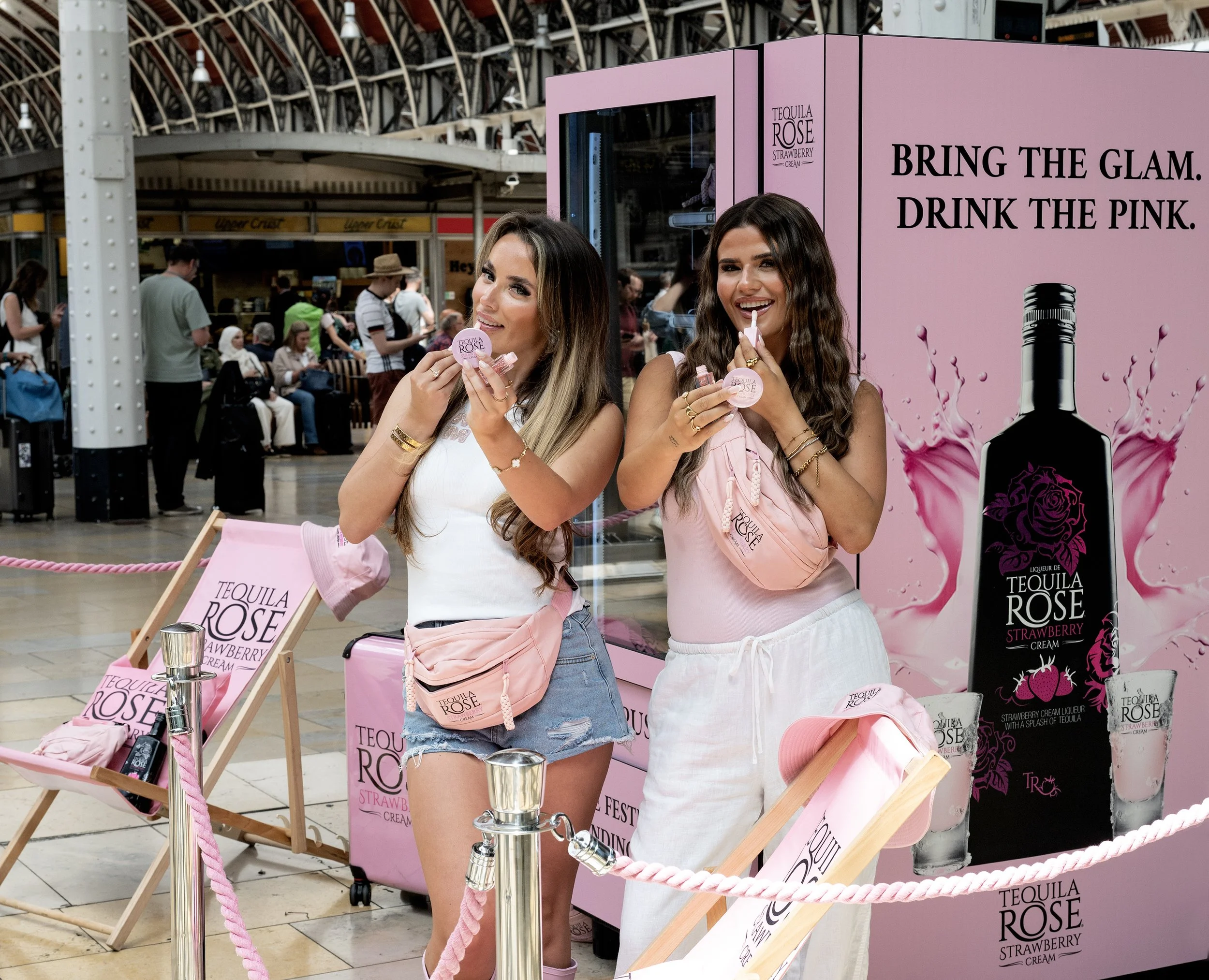
When Tequila Rose came to us, they wanted to turn festival season pink.
So, we flipped the brief. Instead of trying to compete with the main stage, we focused on what festivals are really like. We built our Festi-sentials campaign rooted in those real tension points.
We created 500 exclusive glam bags packed with Tequila Rose minis and branded essentials. Not just merch, but branded must-haves such as lip glosses and mirrors that our survey revealed are Festi-sentials.
Then we launched with the UK’s first Festi-sential vending machine at London’s Paddington Station, turning travel into a full-blown content moment.
And the results included:
3.68M total influencer reach across summer
+16% share of voice vs key competitors
+2.6% community growth
169% engagement rate on social competition
Nostalgia sells (and yes, we sleighed that too)
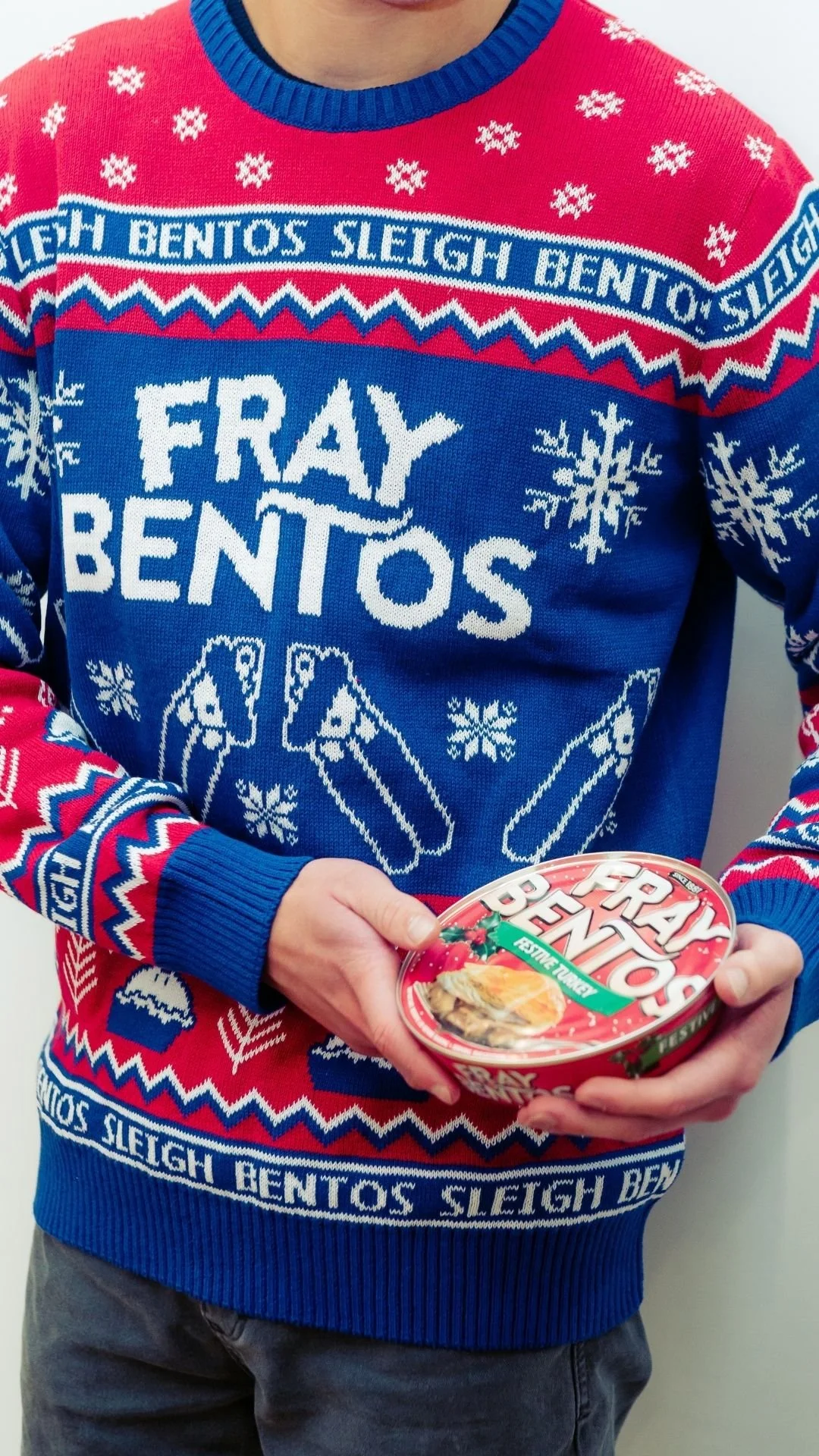
With Fray Bentos, we tapped into something equally powerful ... nostalgia. Enter Sleigh Bentos.
Christmas jumpers that didn’t just look good, they made people laugh, reminisce, and share their great times associated with the iconic Fray Bentos pies.
Because whether it’s festivals or festive season, the principle is the same: find the emotional hook and build merch people feel something about.
The campaign resulted in:
42 media insertions
15 mins radio airtime
155M media reach
111 influencer coverage
24M influencer OTS
How do brands steal the spotlight with branded merch?
Brands leading the way treat merch like the main act – and not just backstage support.
They design with culture in mind, creating pieces that don’t just show up at events, but shape how those events are experienced, shared and remembered.
Because today, the spotlight isn’t just on the stage, it’s in every post, every outfit, every moment that gets shared.
So, when the next cultural moment arrives, do you and your brand want to create something people just see, or something they want to be seen with?
