
From protection to control: why the social media age-ban debate is being reframed in real time
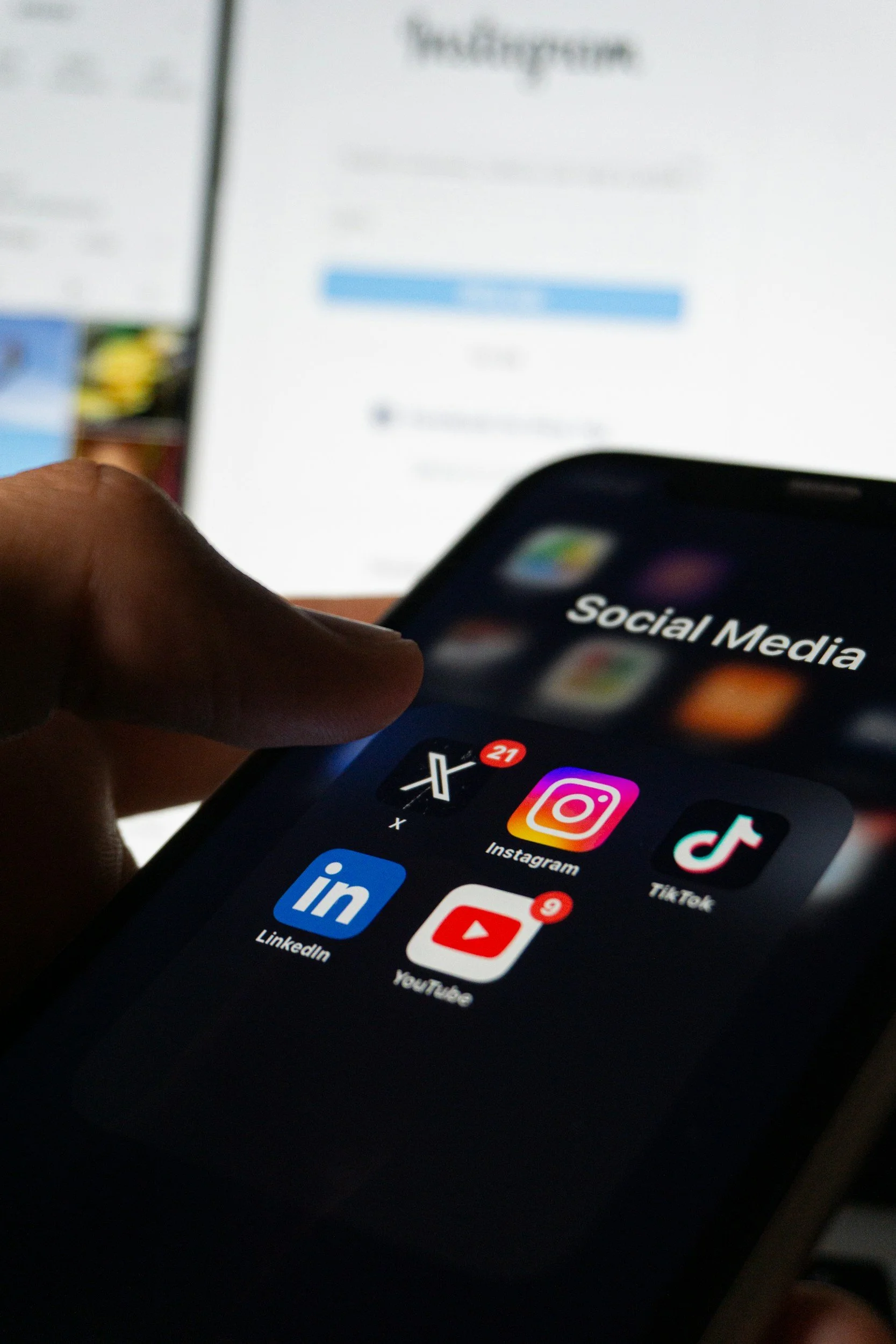
At first glance, the messaging behind social media restrictions for under-16s is hard to argue with.
Protect children.
Improve wellbeing.
Hold platforms accountable.
It’s a narrative that feels obvious and, importantly, intentional. But if you step outside official messaging and look at how this story is unfolding across platforms, something more complex is happening.
Protecting children taps into a universal concern that few people would openly push back on. Indeed, we have already seen broadly cross-party support for the ban. But in digital policy, intent is only half the story. Across Reddit, X and YouTube, the conversation quickly diverges. Instead of focusing on child protection, audiences are reframing the policy in very different terms:
“Government creep”
“Control”
“Overreach”
“Surveillance”
And in some cases, much stronger language:
“1984”
“Dictator”
“Big Brother”
This isn’t just disagreement and it isn’t isolated or platform-specific. Across social media, the direction of sentiment is remarkably consistent only the tone changes
What is the narrative?
What’s striking isn’t just the level of negativity, but how consistently it converges on the same themes, regardless of audience. The focus moves away from children quickly and suddenly the narrative flips because the moment people consider how these policies would work, particularly around age verification, the conversation changes.
It becomes less about, “Should kids use social media?” and more about “Would everyone need to prove who they are to be online?” which is a very different debate.
Underneath the reaction is a clear signal that this is as much about trust as it is about policy. People aren’t just questioning effectiveness. They’re questioning what data would be collected, who would hold it and how it could evolve over time. Even hypothetical enforcement models quickly trigger “slippery slope” thinking.
Whether fair or not, the policy is not being evaluated in isolation. It’s being interpreted as part of a broader trend. The core narrative is remarkably consistent across YouTube, Reddit and X. The tone shifts but the conclusion doesn’t.
This isn’t just a backlash to one proposal. It highlights a broader dynamic in digital policy. The moment a solution involves identity, verification, or data sharing, it stops being about protection and becomes about control. That shift happens fast. And once it happens, it’s hard to reverse.
For governments and communicators, the challenge isn’t explaining why a policy exists. It’s addressing what people believe it could become. Because in the current environment, the gap between intent and interpretation is where the real conversation happens.
While online discourse often amplifies the loudest or most extreme reactions, it doesn’t always capture how views vary across generations and life stages.
So alongside analysing the wider conversation, we spoke directly to two individuals at opposite ends of that spectrum, one aged 18, and another with teenage children, to understand how this debate is landing on a more personal level...
The Mum – Chloe Horrigan
As a mum of two teenage boys, aged 13 and 14, I have felt for some time that I am fighting a losing battle over access to social media. Since they got smartphones, the range of platforms available to them - from Snapchat and TikTok to Discord - has felt vast, fast-moving & totally unpoliced.
From personal experience, I often find myself taking my boys’ phones away for a number of reasons: prolonged doom-scrolling, changes in attitude that I believe are influenced by what they are watching, AI use, gaming, and more. At times, the list feels endless.
Today’s announcement that the Prime Minister intends to introduce a social media ban for under-16s feels both significant and deeply personal.
Having seen the darker side of social media through a situation my youngest found himself in, I welcome the idea of increased safeguarding. If extra layers of protection can help shield children’s mental health and reduce exposure to harmful content, that is something I truly support.
The question remains: how will it work in practice? Is it actually possible to restrict access, or have we reached the point of no return?
I’ve been following Australia’s approach closely. From what I have seen, it appears to be less of a ban and more of ‘account restriction’, with mixed evidence so far on how effectively it is being enforced.
In Australia, parents are not held responsible if their children are found to be using social media. But would some level of parental accountability make a ban easier to enforce?
I know I would be hotter on monitoring if there were a risk of being fined. If the policy is to work in practice, there need to be clearer consequences and stronger enforcement backing it.
I keep coming back to the same question: is something better than nothing? And on balance, I think it probably is.
I genuinely welcome Sir Keir Starmer’s announcement that social media access will be restricted for under-16s. As a parent, I want to believe this will give us families more support and children more protection.
However, I will be watching closely to see how the policy is enforced, how/whether platforms are held accountable and whether it can keep pace with the reality of teenagers’ online lives.
The Teen – Jack Chell
As an 18 year old, social media has always been present in daily life. Growing up as this technology has emerged has meant that communication online has been more of a social norm, to the extent of potentially delaying/missing out on essential childhood experiences.
When it comes to the new legislation, I largely support the implementation of a social media ban for <16 year olds.
I have seen the effect prolonged usage has on my peers and, to an extent, on myself.
One example was in my A-Level business class, where we used to compare our weekly screen time usage as the notification arrived. Every time, I thought my average was high, at approximately 3 hours a day. In contrast, the two other people on my table averaged more than 9 hours a day on TikTok alone.
Whilst this is a small sample set, it does show that there are people out there who may struggle to limit their social media usage, showing a need for government intervention.
This raises the question about whether it is the right decision to restrict children’s access to social media, essentially removing the child’s control over their own decision-making. If I were in that position, I believe I would want to have a sense of control over the decisions I’m able to make. However, if 15-16 year olds were legally allowed to continue using social media, how many would individually decide to limit their social media usage?
The other part of the ban is to consider how the ban affects the lower bounds of the age groups. One thing I immediately notice when I’m working at my job in a busy bar restaurant is the number of small children who have been given a phone or tablet to keep them entertained.
When I have given the table their food, almost every time there has been a negative reaction from the child when the phone is taken away, as opposed to having a positive reaction to the plate of food they have been presented with instead.
To me, this shows a need for the social media ban as it appears that children subconsciously are prioritising being online over their physical health and nutrition. Only by removing social apps can we ensure that children are growing up with the right skills and experiences for their lives as adults.
Analysis notes: Using our social listening tool, Pulsar, we recorded 2,348 posts on X. 1,280 Reddit posts and 298 comments on YouTube from 13th-15th June 2026
